
Clogged drains are one of the most common service calls I get, and in many cases, the fix doesn’t require corrosive cleaners that can damage pipes and harm your plumbing system over time. Using natural methods protects your pipes, your health, and the environment.
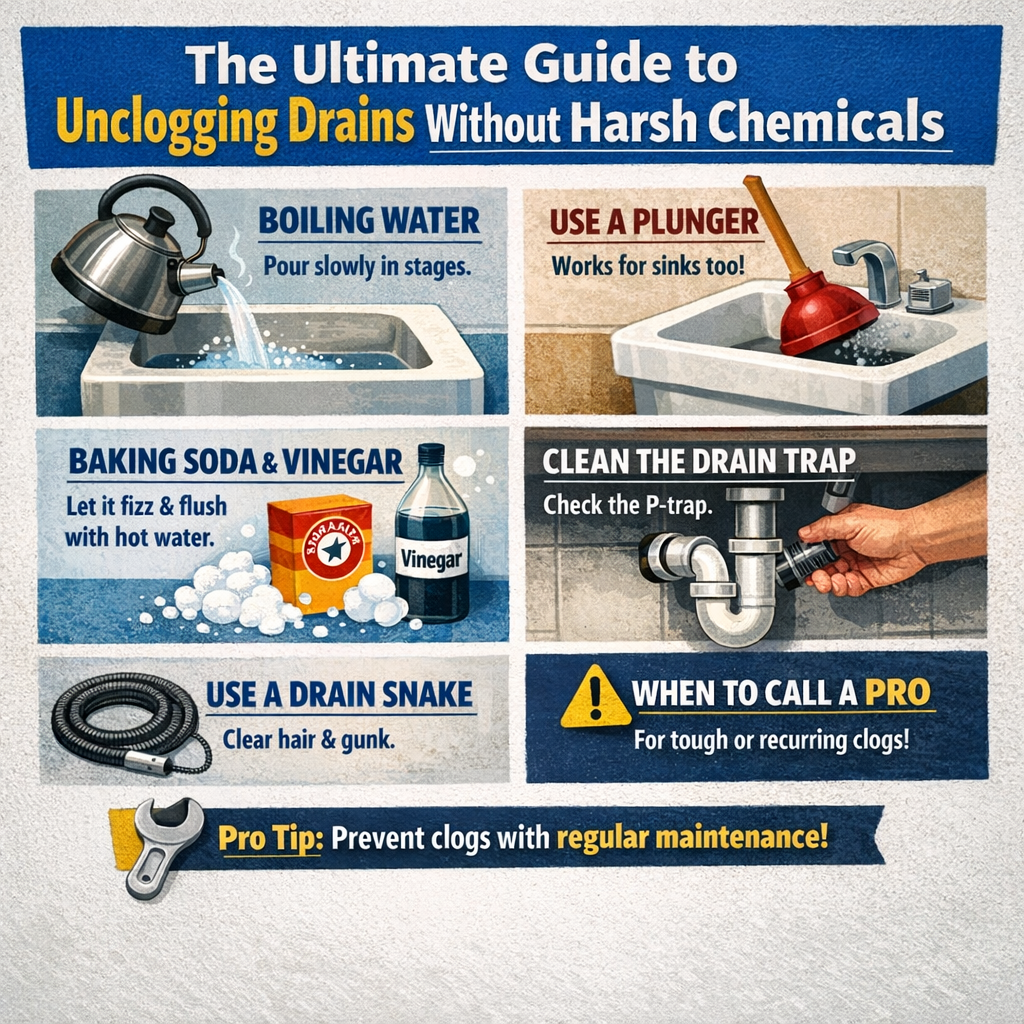
1. Start with Boiling Water
For slow drains, especially in kitchen sinks, boiling water can break down grease and soap buildup. Pour it slowly in stages to give it time to work.
2. Use a Plunger (Yes, Even for Sinks)
A good plunger creates pressure that can dislodge clogs in sinks, tubs, and showers. Make sure there’s enough water to cover the plunger head for the best seal.
3. Try Baking Soda and Vinegar
Pour ½ cup of baking soda followed by 1 cup of vinegar down the drain. Let it fizz for 10–15 minutes, then flush with hot water. This works well for organic buildup.
4. Clean the Drain Trap
If the clog persists, place a bucket under the sink and remove the P-trap. Hair, grease, and debris often collect here and can be easily cleared.
5. Use a Drain Snake or Zip Tool
These inexpensive tools are excellent for removing hair and debris from bathroom drains without damaging pipes.
When to Call a Pro
If multiple drains are clogged or water is backing up, the issue may be deeper in your plumbing system. That’s when it’s time to call a professional before it turns into a bigger problem.
Pro tip: Regular maintenance beats emergency repairs every time. A few simple habits can keep your drains flowing smoothly year-round.
Leave a Reply